Indoor Cats and Vaccination: A Modern Perspective
For cat lovers, understanding the vaccination needs of our indoor companions is essential for their health and wellbeing. Recent guidelines challenge traditional views on yearly vaccines, especially for those cats living in controlled environments. Discover the latest insights on how to keep your indoor feline safe and thriving with the right vaccination approach!
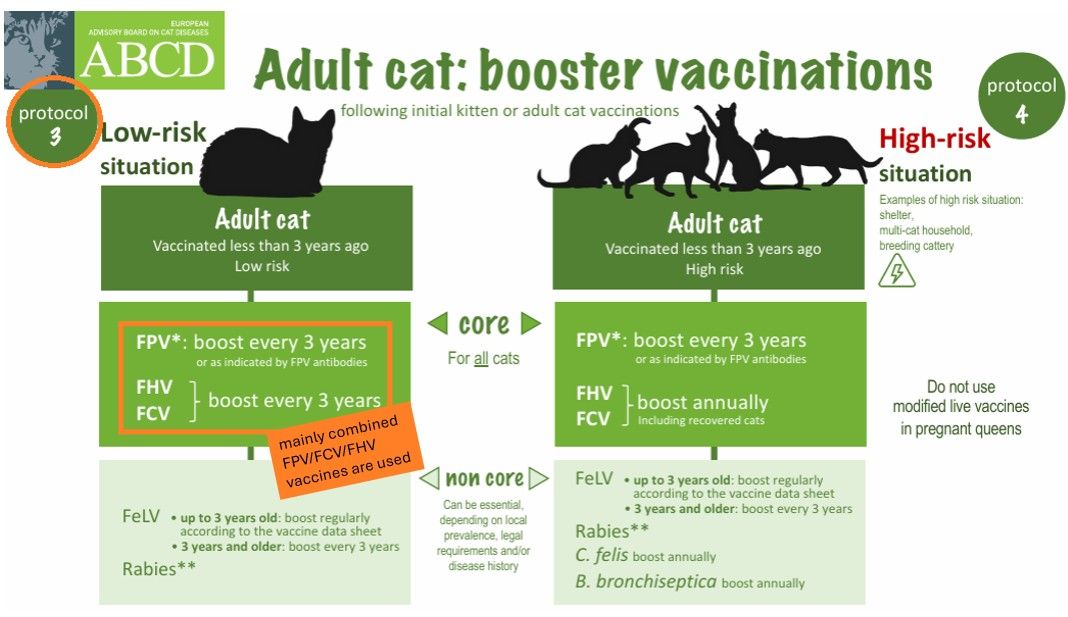
For years, cat owners have been told:
“Your cat needs yearly vaccines.”
But according to modern guidelines from the World Small Animal Veterinary Association (WSAVA) and the European Advisory Board on Cat Diseases (ABCD), this is no longer evidence-based—especially for indoor cats.
The following advice is also included in the Recommendations on vaccination for Asian small animal practitioners: a report of the WSAVA Vaccination Guidelines Group.
Indoor Cats = Completely Different Risk
A strictly indoor cat:
- has no contact with other cats
- is not exposed to bites, grooming, or shared environments
- lives in a controlled environment
This drastically reduces exposure to most infectious diseases.
Not All Viruses Behave the Same
Core vaccines protect against:
- FPV (panleukopenia)
- FHV (herpesvirus)
- FCV (calicivirus)
But their transmission is fundamentally different.
FPV: The Only Real Indoor Threat
- Extremely resistant in the environment
- Survives on objects, shoes, clothes
- Can be carried into the home indirectly
FPV is the only core virus that remains truly relevant for indoor cats.
The good news is that a single dose of a high-quality MLV FPV vaccine is sufficient to induce long-lasting immunity in the vast majority of cats over 26 weeks of age, with strong evidence of protection lasting at least 3 to 4 years when properly stored and administered. In contrast, immunity induced by FCV and FHV vaccines is generally less robust and less long-lasting compared to FPV.
FHV: Requires Close Cat Contact
- Spread mainly via direct contact with secretions
- Environmental transmission plays little to no role in normal households
- Virus becomes latent and reactivates under stress
Without contact with other cats, the risk is very low
FCV: More Resistant, But Still Needs Exposure
- Spread primarily via direct contact with infected cats
- Can survive in the environment (up to weeks)
- Indirect transmission mainly documented in:
- catteries
- shelters
- high-density environments
In a typical indoor home:
- no infected cats
- no shared equipment
→ practical risk is minimal
Annual Vaccination = Outdated Practice
Guidelines clearly state:
Low-risk indoor cats should be vaccinated
every 3 years or even less frequently
Not annually.
Annual vaccination is a legacy habit, not a scientific necessity.
The Over-Vaccination Problem
Vaccines are medical interventions.
More frequent vaccination:
- does not increase immunity
- may increase unnecessary biological stimulation
Some studies have shown an association between:
- frequent vaccination in older cats
- and chronic kidney disease (CKD)
Not proven causation — but enough to justify caution.
The Modern Principle
“Vaccinate as much as necessary, but as little as possible.”
For indoor cats:
- full kitten protocol
- proper booster
- then extended intervals based on real risk
What Owners Should Understand
- Indoor cats are not exposed like outdoor cats
- FPV is the main relevant threat
- FHV and FCV require real exposure to infected cats
- Annual vaccination is often obsolete
- Over-vaccination should be avoided
A good veterinarian adapts the protocol.
An outdated one repeats the same schedule for every cat.
The Real Shift in Thinking
For many cat owners, the idea is simple and deeply ingrained:
once a year you go to the veterinarian, and your cat gets vaccinated.
However, this way of thinking no longer reflects modern veterinary medicine. Current recommendations from organizations such as the WSAVA and ABCD have moved away from this routine approach. Today, the focus is no longer on automatic vaccination, but on the individual health of each cat.
The annual veterinary visit is still essential—but for a different reason than many people assume. It is not simply a “vaccination appointment,” but an opportunity to evaluate the cat as a whole. This is particularly important for indoor cats, which often hide signs of disease very effectively. Conditions such as dental disease, gradual weight changes, or early-stage kidney problems can develop silently and remain unnoticed without regular examinations.
This is where the concept of the yearly “wellness check” comes in. During this visit, the veterinarian assesses the cat’s overall condition, examines the teeth, monitors body weight and body condition, and—especially in older cats—may recommend additional tests such as bloodwork or urinalysis. It is at this moment that decisions are made about what this individual cat actually needs this year.
And that is the key difference.
Vaccination is no longer a fixed schedule applied to every cat in the same way. As emphasized by the Cornell University College of Veterinary Medicine, vaccination decisions in adult cats should always be based on individual factors such as lifestyle, age, health status, and real exposure risk.
A strictly indoor cat lives in a completely different context compared to an outdoor cat. While both were often treated identically in the past, modern medicine recognizes that different risks require different strategies.
This does not mean that vaccines are unimportant—far from it. They remain one of the most effective tools in preventive medicine. But precisely because they are medical interventions, they should be used thoughtfully. The Cornell University College of Veterinary Medicine also highlights that no vaccine is entirely without risk, and that benefits and risks should always be weighed for the individual patient.
The real shift, therefore, is not about doing less—but about thinking differently.
Instead of asking:
“Which vaccine is due this year?”
The more appropriate question today is:
“What does my cat actually need this year, based on its real risk?”
Once this perspective changes, everything else follows naturally. The annual visit remains a cornerstone of good care—but the idea of automatic yearly vaccination is gradually becoming a thing of the past.