Happy Cats, Calm Owners: Tackling Problem Behaviors

Cats bring joy and companionship, but sometimes their quirky behaviors can create a bit of chaos at home. Discover how to transform those challenges into harmonious solutions that benefit both your feline friend and your peace of mind. With expert tips and insights, you can create a loving environment where happy cats lead to calm owners.
Cats are adorable… and sometimes maddening. From marking territory to night-time meowing, problem behaviors can stress both cats and their humans. But with the right tools and strategies, most issues can be managed successfully.
Early Detection and First Steps
Acting early is key. A quick behavioral tip from your vet can stop a minor problem from escalating. For trickier issues, a qualified behaviorist—a vet or trained technician—can guide owners to effective solutions.
Even without a full diagnosis, environmental adjustments reduce stress and conflicts, improving your cat’s comfort and safety.
The Five Pillars of a Cat-Friendly Environment
1. Safe Spaces
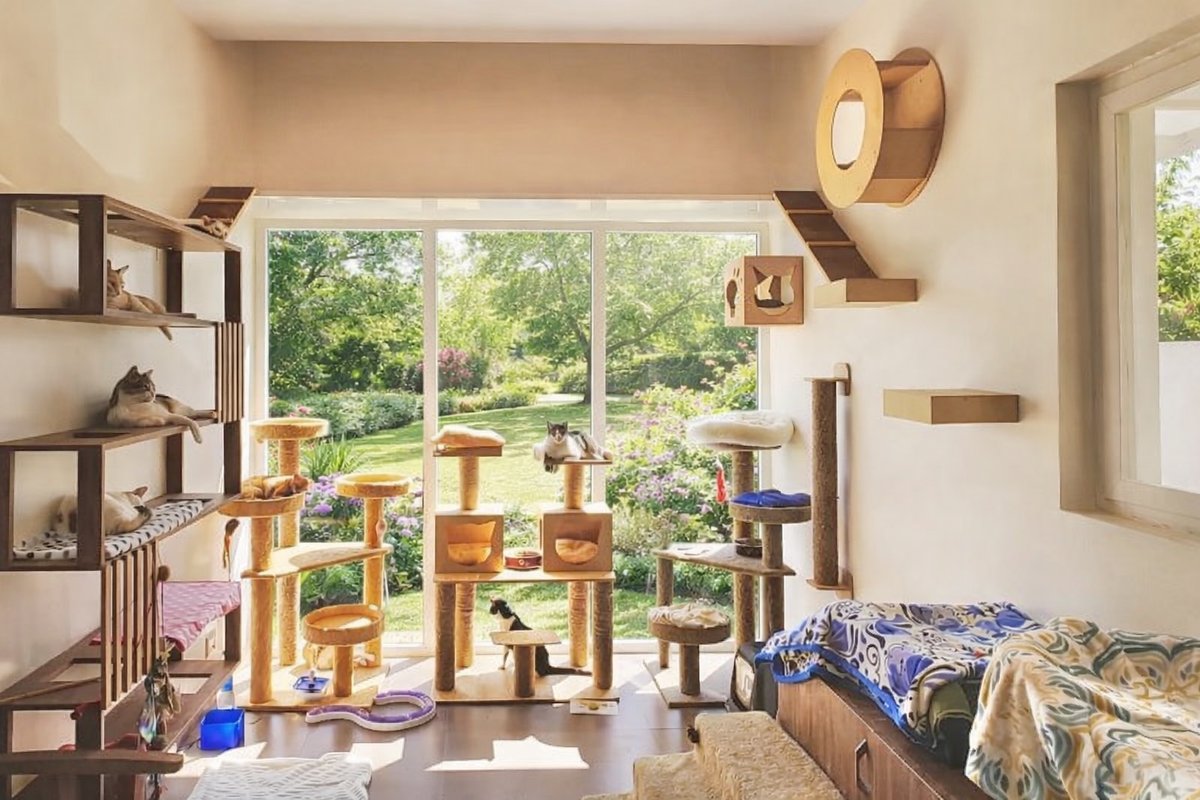
Cats need private retreats—high shelves, cozy hideaways, covered tents, or comfy beds. In multi-cat homes, multiple entries prevent territorial conflicts. Senior cats may need low, accessible spaces, while kittens need playful corners at floor level.
Tip: Offer a variety of beds (soft, covered, open) and different heights. This allows your cat to choose where it feels safest and most comfortable. Varied environments with obstacles and levels allow cats to play safely, rest, or hide when needed.
2. Multiple and Separated Resources
Food, water, resting spots, and litter boxes must be multiple and separate. Each cat should have at least one of each resource plus an extra—especially litter boxes. Litter boxes should be at least 1.5 times the cat’s length, giving them space to turn and dig comfortably. Food and water should be apart from litter boxes, respecting the cat’s natural hygiene instincts.
3. Play & Predatory Opportunities
Hunt, pounce, chase, capture! Use interactive toys, food puzzles, or DIY setups:
- Paper bags with treats
- Cardboard tube mazes
- Food hidden in boxes or rolled in paper
Let's not forget: Playing with your cat in a way that suits its age, at a consistent time and duration each day, several times if possible, greatly helps prevent stress caused by under-stimulation.
4. Positive Social Interaction
Cats benefit from predictable, friendly contact. Early socialization helps kittens grow confident, and adults appreciate short, frequent, low-intensity interactions that respect their personality.
5. Respect Their Sense of Smell
Cats live in a scented world. Avoid strong perfumes, maintain familiar household odors, and introduce new objects gradually. Consider synthetic pheromones if necessary.
Behavioral Tools That Work
Understanding learning principles helps: positive reinforcement, shaping, desensitization, and counterconditioning. Examples:
- Reward your cat for coming when called with high-value treats.
- Gradually expose cats to stressors while keeping them relaxed.
- Reinforce incremental steps toward desired behaviors.
Key Takeaways
- Early advice prevents escalation.
- Environmental tweaks: physical, social, and olfactory.
- Cats need: safe spaces (multiple beds & heights), multiple resources, play, positive human interaction, and scent respect.
- Litter boxes: 1 per cat + 1 extra, at least 1.5x cat length, without a lid, placed separately.
- Training using positive reinforcement enhances well-being and reduces problem behaviors.
Don’t be afraid to drill, make changes, or improve your space—if you move out, you can always fill holes and paint over them. All of this is based on the scientific MEMO method, not our personal ideologies—these steps are simply upgrades to your life.
With knowledge, intuition, and a cat-friendly environment, even tricky behaviors can be managed—making cats happier and owners calmer.